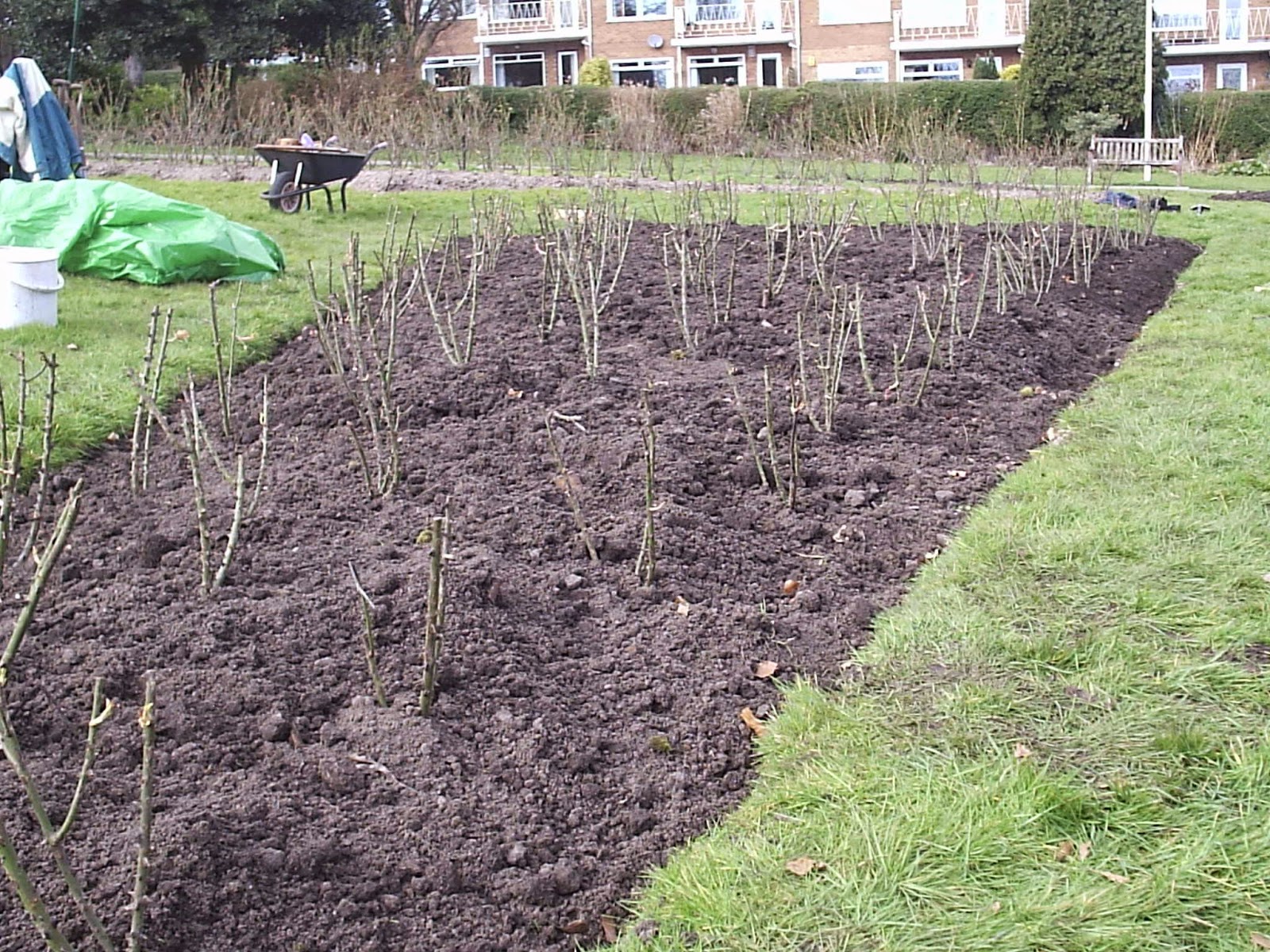
Our volunteers have finally completed all the rose pruning. This was a huge task as many of the more mature roses were congested with old, dead stems which needed to be cut out. We are still urging people to support our Rose Appeal so that we can restock more beds in the Autumn. During July we hope to organise some time for volunteers to meet to deadhead the rose bushes after their first flush of flowers to prolong the season. I have created a collage to show which shrubs and perennials are at their finest at the moment. You can see Berberis, Forsythia, Rhododendron, Erysimum Bowles Mauve,Pulmonaria, Comfrey and forget-me-nots. There are also many wallflowers and Lunaria annua just opening. Come along and see for yourself.
Monday, 20 April 2015
Spring has arrived.
Our volunteers have finally completed all the rose pruning. This was a huge task as many of the more mature roses were congested with old, dead stems which needed to be cut out. We are still urging people to support our Rose Appeal so that we can restock more beds in the Autumn. During July we hope to organise some time for volunteers to meet to deadhead the rose bushes after their first flush of flowers to prolong the season. I have created a collage to show which shrubs and perennials are at their finest at the moment. You can see Berberis, Forsythia, Rhododendron, Erysimum Bowles Mauve,Pulmonaria, Comfrey and forget-me-nots. There are also many wallflowers and Lunaria annua just opening. Come along and see for yourself.
Tuesday, 10 March 2015
The 2015 Rose Appeal
Last weekend, the 7th and 8th March was the first phase of planting in the Rose Garden.
During the Winter months we had been busy
By Saturday lunchtime all the volunteers had just finished planting up two large beds. The first was filled with Rose National Trust, a red rose. The gentlemen in this picture on the right are looking over the second bed, which we filled with a yellow variety called Arthur Bell. Each bare root rose bush was dipped into a gel containing Rootgrow, a mycorrhizal fungi which will help to get the roots established faster to create healthier shrubs. Rose English Princesswas the third variety to go in.
Thursday, 15 January 2015
The Big Tree Plant.
We all gathered by the play area at 10 o'clock on Saturday (16th November) morning. The morning began with a general explanation about where the trees would be planted and how to plant a tree. A gazebo had been erected with plenty of hot and cold beverages and also a selection of chocolate biscuits and snacks kindly supplied by Sainsbury's of Woodchurch Road. A member of their staff was present to help serve these at intervals during the day. There was a wonderful turnout of willing and enthusiastic volunteers of all ages. Many passers by commented on how lovely it was to see so many youngsters getting involved.
The first trees to go in were the larger specimins along the Storeton Road end of Oxton Fields. These required staking and tying in. Two Council gardeners were on hand to drive in the stakes for us. It was a bright, sunny morning and everyone was in good spirits. After this first stage was complete, a well deserved refreshment break was enjoyed by all the volunteers.
Here you can see the cross marked out in advance so we knew where the trees were to go in the ground. Many volunteers were from organisations in Birkenhead such as the Guides, Birkenhead Sea Scouts, Explorers, Viking Sea Scouts, Air Cadets and Wirral Youth Service.
A huge thank you for all your help and support over that tree planting weekend.

Here in the picture on the right you can see just how much effort went into planting just one of the largest trees, from digging, positioning the tree and the stake before refilling the hole. We had a few delays at this stage as we waited for the Council gardeners to drive in the stakes for us. We were not allowed to do this ourselves due to Health and Safety regulations. There were far more volunteers than the Council had anticipated so the trees were being planted faster than they could keep up.

In this picture we are being given a lesson on how to attach the strapping between the tree and it's stake.


More Hawthawn trees were planted at the side of Duck Pond Lane. Here is our Chairman Gary with some of the Air Cadets and Wirral Youth Service. It was particularly stony along this path and hole digging became quite troublesome but we kept cheerful and soldiered on. Below are more pictures showing our wonderful volunteers.We couldn't have done it without you!
Sunday, 21 December 2014
Monday, 3 November 2014
Raising the Green Flag
Friends of the Arno and Oxton Fields gathered last Saturday 1st November 2014 at noon to join together in celebrating another achievement. We have been awarded the Green Flag status for yet another year. Here you can see members of the Committee attaching the new flag to the pole. During the Summer we held our breath waiting for an inspector to pay us a ' secret ' visit and announce whether or not we had earned the right to keep our Green Flag status. It was not until September that we were informed of our success.
Refreshments were provided and we drank a toast as the flag was raised in the Rose Garden. Many thanks to all those who came along to help mark the occasion.
Monday, 27 October 2014
Roses in Bloom
![]() |
| Brenda Holton's photographs |
We would be glad to share your photographs with our online supporters, so please send us any nice pictures you have taken on your visits to the Rose Garden and Oxton Fields.
Thursday, 18 September 2014
Stars of the Late Summer Border
As we enjoy this glorious Indian summer, there are still plants in the border which are flowering and providing valuable late summer nectar for insects. In an earlier post you saw five eupatorium plants which had been grown from seed and donated to the long border. Here they are in the centre of the picture in full bloom, nestled between phlox and japanese anemone HonorineJobert. All three of these perenniels are both attractive and beneficial to bees and butterflies, which demonstrates how a wildlife friendly planting scheme need not be dull.

Earlier in the spring these lunnaria ( Honesty) were covered in purple flowers. Although these have long since faded, many consider their shiny, silvery seedcases just as beautiful. As much as possible the perenniels are left to die back naturally, often leaving seeds for birds during the harsh winter months, or hibernating sites for spiders and the like. A cobweb covered in early morning dew can still draw the eye.
What a lovely combination, the complementary yellow and purple. These stalwarts of the late summer border are hardy, extremely easy to care for, and quick to establish and spread. The yellow of the Rudbeckia stands out beside a group of purple Aster (Michaelmas Daisy), and you can clearly see how these plants are attracting a veritable host of wildlife. The Painted Lady butterfly is enjoying the nectar rich Rudbeckia, while a bee also feeds on the Aster. On the left a caterpillar is also visible. In the winter birds will also be able to pick at the Rudbeckia seeds.
Subscribe to:
Posts (Atom)